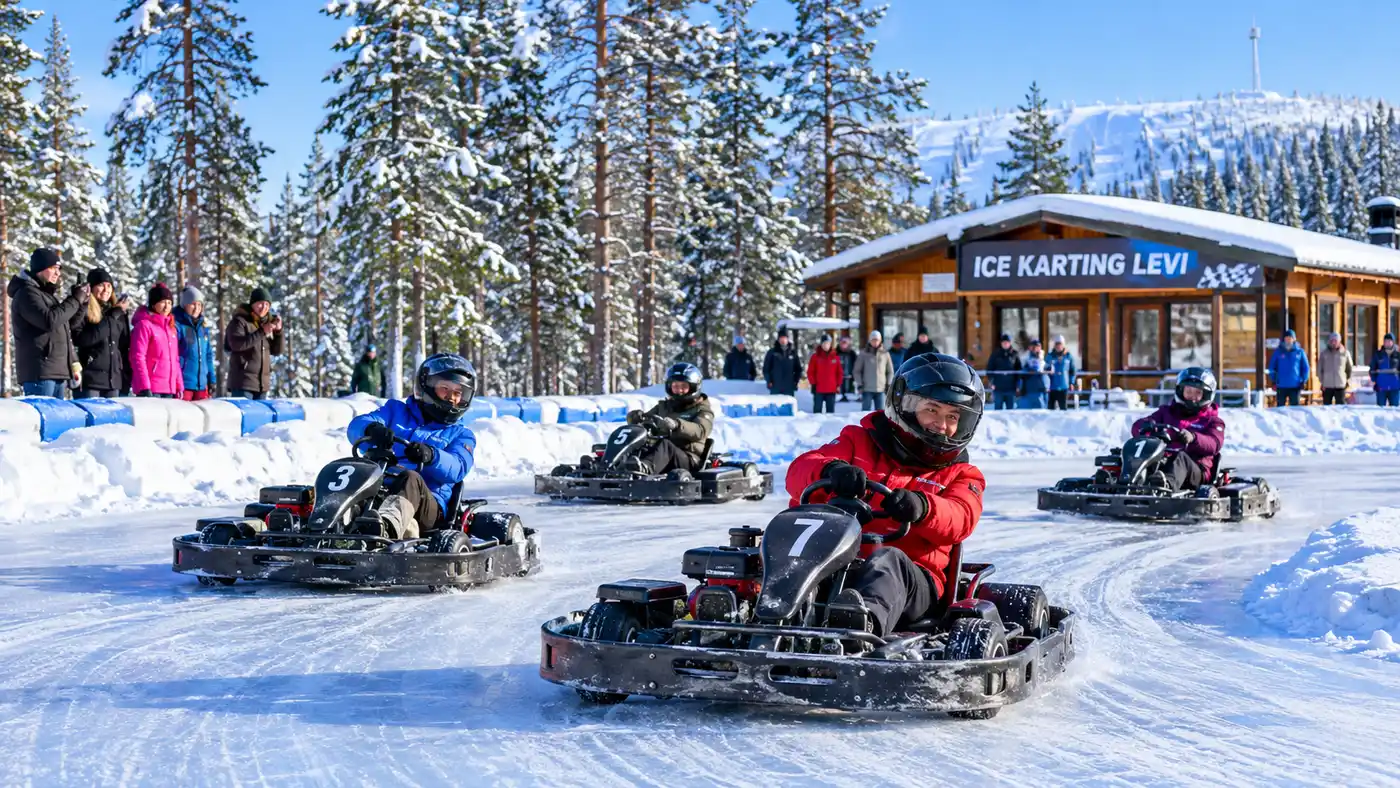
Ice Karting Levi Prices, Hours, and Practical Guide
Standing by the edge of an ice marsh outside Sirkka at minus nineteen degrees, your exhaled breath freezes onto your eyelashes before you even touch a steering wheel. Most people coming up to Lapland expect silent reindeer rides or chasing the northern lights through quiet pine forests, but throwing a four-stroke go-kart sideways onto sheet ice is easily the loudest, rowdiest antidote to all that quiet wilderness. Before you run out onto the snow, sorting out your budget is smart because the typical ice karting levi price runs anywhere from 60 to 90 euros for a single open session, depending on the month and whether you book private heats or shared open slots.
I spent several winter seasons around Kittilä and the ski runs of Levi, and karting on ice is one of those adventures where walking in unprepared leads to numb toes and unexpected costs. You need to know the track layouts, how the timing transponders work, what gear they actually hand you inside the warm cabin, and whether a twin-pack ticket gives you enough seat time before your fingers turn into wooden pegs. It is fast, noisy, and slippery, but it requires a little homework to get right.
Book your ice karting levi experience:
Understanding Ice Karting Levi Price and Ticket Options
Let us talk about the money first. If you browse local signs in Sirkka or search Finnish booking portals, you will see the phrase ice karting levi hinta attached to various tier options. The entry-level ticket buys you a single fifteen-minute heat. That generally runs about 65 euros per driver at the major tracks close to Levi village. Fifteen minutes might sound brief on paper. On an icy track where your forearms fight the steering wheel around six sharp corners every lap, fifteen minutes is plenty to get your heart thumping and your arms burning.
If you want more track time, the double-heat package usually drops the per-minute rate. For about 110 euros, you get two fifteen-minute sessions with a warm berry juice break inside the kota hut between runs. That break gives your hands time to thaw out by an open fire while the track marshals grade the corners or reset the safety bumpers. Serious groups should skip the casual public heats entirely and book a private mini-Grand Prix package. Those run around 135 euros per head and include warm-up laps, a proper timed qualifying round, and an eight-lap final race from a standing grid start with a checkered flag.
Children have their own lower pricing tier because they drive smaller karts with lower horsepower engines. Expect to pay roughly 45 euros for a dedicated ten-minute junior run on an oval or shortened track layout. These junior sessions run separately from the adults to avoid heavy collisions, which gives parents peace of mind while the little ones practice drifting safely.
| Session Type | Track Duration | Typical Price (EUR) | Best Suited For |
|---|---|---|---|
| Single Open Heat | 15 minutes | €65 | First-timers wanting a quick taste of ice drifting |
| Double Heat Pass | 2 x 15 minutes | €110 | Drivers wanting to improve lap times after a rest |
| Mini Grand Prix | Approx 35 minutes total | €135 | Groups of 4 to 12 racers seeking competitive heats |
| Junior Karting | 10 to 12 minutes | €45 | Kids under 140cm using restricted 120cc engines |
Track operators usually include all protective clothing in that fee. That covers the heavy thermal suit, insulated winter boots, balaclava, full-face helmet, and heavy-duty racing gloves. Some budget activities in Scandinavia sneak in extra equipment rental charges at checkout, but here the ticket price covers everything you wear on the ice.
Operating Schedules and Levi Ice Karting Aukioloajat
Checking the schedule before driving out to the frozen swamps is essential. Searching for levi ice karting aukioloajat shows operating hours that generally run daily from 10:00 to 19:00 or 20:00, starting from late November once the swamp ice reaches thirty centimeters of thickness and lasting until mid-April when the spring thaw begins. Peak season arrives in late December and continues throughout February. During those weeks, tracks book out two or three days in advance, leaving walk-in visitors sitting on benches waiting for no-shows.
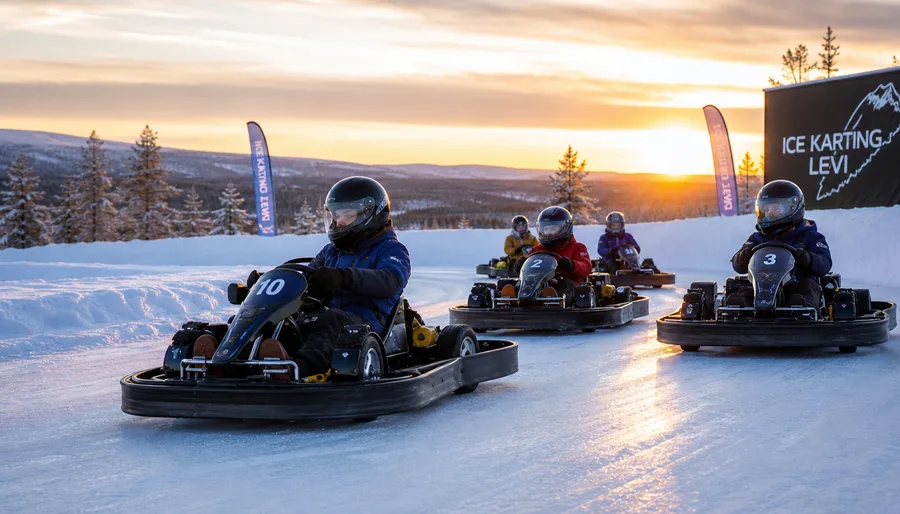
Lighting changes the entire mood of the track. In December and January, the sun hides below the horizon during Kaamos, the polar night. The track floodlights kick on by 14:00, casting bright tungsten beams across pristine snow berms and deep blue ice. By March, daylight lingers past 18:00, giving you crisp sunlit laps with snow glare bouncing off the windshields of nearby snowmobiles. The surface texture also alters throughout the day, transitioning from crunchy morning snowpack to glassy, polished ice after dozens of karts have worn down the grooves.
- Morning sessions (10:00 to 12:00): Freshly cleared and dragged ice that provides the cleanest line and highest grip levels.
- Midday sessions (12:30 to 14:30): Warmest ambient temperatures of the day, making it much easier on hands and faces.
- Evening floodlight sessions (15:00 to 19:00): Pure night racing atmosphere under bright sports lights, though temperatures often drop several degrees after sunset.
Note: Engines will not start reliably and operators cancel sessions when ambient temperatures plummet below minus twenty-five degrees Celsius. Monitor the morning weather report if your visit coincides with a deep Arctic cold snap.
Private group bookings can sometimes be arranged outside standard public times. If you have a corporate event or eight friends traveling together, operators will often open early at 09:00 or stay running until 21:00, provided you arrange it by phone or email a few days ahead. Booking online through track websites gives you instant time-slot confirmations, which beats trekking out to the woods on a speculative taxi ride.
The Track Experience and Ice Karting Levi Reviews
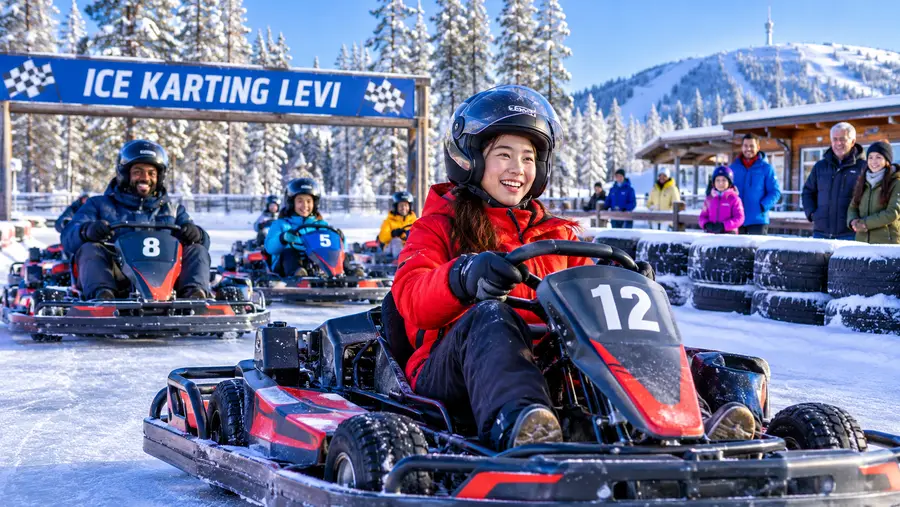
Reading through recent ice karting levi reviews reveals a recurring theme: people are surprised by how much physical effort goes into driving on ice. Many travelers imagine spinning tires on a smooth pond with zero control. The reality is totally different. The machines are outfitted with custom studded rubber tires that dig ferocious claw marks into the ice sheets. If you are curious about the mechanical setup under the hood, read our guide on Ice Karting Cars, Studded Tires, and Specifications. Those metal studs provide surprising traction, meaning you can actually brake hard, set up an apex, and fire out of a turn with decent speed.
You quickly discover that the throttle steers the machine just as much as the steering wheel. If you turn the wheel hard without gas, the front tires simply slide wide in terrible understeer. Instead, you flick the wheel toward the turn, tap the mechanical footbrake to break traction at the rear axle, and stomp the throttle pedal down. The back end swings wide, throwing up roosts of crushed ice crystals. You counter-steer into the slide, keep the engine singing, and let the studded rear rubber claw you straight down the following straightaway. It is immensely satisfying once you link three clean corners together.
Pro tip: Keep your visor cracked open about half a centimeter when you pull out of the pit lane. If you close your helmet visor completely, your hot breath instantly turns to a sheet of frost against the freezing interior shield.
The safety design makes mistakes relatively painless. Ice karting Lapland circuits are walled off with thick, soft snowbanks plowed three to four feet high. If you enter a sweeper carrying too much momentum, you will slide broadside into a cushion of powder. The kart will simply grind to a halt with a muffled thud. A track marshal on a snowmobile will quickly motor over, haul the back bumper out of the snowdrift using a tow strap, give your helmet a friendly pat, and wave you back into the heat.
Book your ice karting levi experience:
Safety, Restrictions, and Ice Karting Levi When Pregnant
Motorsport carries real physical forces, and ice circuits are bumpy places. People frequently ask about ice karting levi when pregnant, and the medical and track answer is unequivocal: absolutely do not participate. The karts feature zero suspension systems. Every vibration, expansion crack, and rut carved into the frozen track passes straight through the thin fiberglass seat and directly into your tailbone, spine, and pelvis. Add the constant risk of another kart sliding into your side-pod at thirty kilometers per hour, and the jarring forces become far too dangerous for an expecting mother.
Driver height restrictions exist for very practical mechanical reasons. To pilot the full-size adult karts, which are powered by 270cc or 390cc four-stroke Honda engines, drivers need to stand at least 140 centimeters tall. If you are shorter than that mark, your boots cannot reach the brake and throttle pedals safely while keeping your back planted against the seat. Some tracks have pedal extender blocks, but they still enforce the height line strictly for insurance reasons. Weight limits are generally capped around 125 kilograms, simply because the rigid racing bucket seats will painfully squeeze wider hips.
Sobriety rules are enforced without exception. Finland has a zero-tolerance culture when it comes to operating motorized vehicles, and winter tracks are no different. Marshals keep breathalyzers inside the sign-in hut. If you have been enjoying hot mint cocoa with rum in the ski lodges up on the hill, do not bother showing up for your heat. They will refuse you entry to the pit lane on the spot without issuing a refund.
Practical Planning for Kart Finland Enthusiasts
Getting out to the circuits requires a little forethought since they sit outside the immediate walking zone of Levi center. Most tracks are located between five and nine kilometers from the central pedestrian village, typically hidden behind forest buffers near the Kittilä road or toward Köngäs. Taxis are plentiful near the front slopes, costing roughly 25 to 35 euros each way. Some operators run a dedicated shuttle van that picks up racers in front of the local safari offices, but you must reserve a seat on that van when buying your karting voucher.
- Thermal base layers: Wear moisture-wicking synthetic or pure merino wool leggings and tops; leave cotton hoodies and jeans at the hotel.
- Footwear choices: Wear thin wool socks into the lodge, then slide into the thick insulated snow boots provided by the track staff.
- Outer clothing: You will wear a heavy padded overall over your regular thermal gear, which acts as an impenetrable wind blocker.
- Finger warmth: Slip a pair of thin touchscreen-capable liner gloves under the bulky racing gloves to protect your bare skin if you remove a glove to check your phone.
For those passionate about winter kart finland adventures, ice karting is not just a commercial tourist novelty; it is a genuine local pastime. Finns have used frozen lakes for driver training and grassroots rally racing for over fifty years. You can feel that heritage in how the pit crews maintain the machines. Mechanics constantly tune the carburetors to adjust for air density drops, sweep the snow out of throttle linkages, and inspect the tire studs between sessions. The smell of burning unleaded fuel mixing with pine-scented Arctic air is an unforgettable memory.
If you want clear timing sheets, ask the front desk for your printout after the heat. Most facilities use high-frequency Mylaps timing loops buried deep under the ice surface. Each kart carries a transponder mounted on the front bumper frame. The screen inside the heated warming hut displays lap times down to the thousandth of a second, which settles every argument about who actually won the race down to the back hairpin corner.
Frequently Asked Questions about ice karting levi price
What is the average ice karting levi price for tourists?
A standard single open session costs around 65 euros per driver, which includes fifteen minutes of driving along with all heavy thermal outer gear, helmets, and track orientation.
Can children participate in ice karting at Levi?
Yes, children who stand at least 125 centimeters tall can drive junior karts with smaller 120cc engines on restricted tracks, with tickets costing roughly 45 euros.
What happens if the weather gets too cold for karting?
If temperatures drop below minus twenty-five degrees Celsius, track marshals suspend operations for safety and mechanical reasons. You will be rebooked for another time or issued a full refund.
Is round-trip transport included in the ticket cost?
Transport is usually an optional add-on costing 15 to 20 euros extra per person, although some package deals include pickups from Sirkka village center.
Quick Reference
- Single heat cost: approx €65 for 15 minutes
- Track season: late November through mid-April
- Operating hours: daily 10:00 to 19:00 or 20:00
- Driver minimum height: 140cm for adult karts
- Cold cutoff: sessions cancel at -25°C
Book your ice karting levi experience:
The Bottom Line
Ice karting is honestly one of the wildest things you can do on four wheels without an active rally license. The combination of studded tires, howling engines, and frozen lakes delivers an intense adrenaline rush that quiet ski lifts cannot touch. Book an afternoon slot when the lights turn on, listen to the marshals during the safety speech, keep your throttle planted through the slides, and you will come off the ice grinning ear to ear.
Read more about ice karting levi.